The Puzzle in the Middle East
Recently our CMJ USA Shoresh study group lined up on a sunny
morning at Ben Gurion airport security to check in for our return flight
home. The day before, we had travelled to the northern most borders
of the Golan Heights and looked across valleys into Lebanon and Syria.
All was peaceful as we gazed at the hills in the distance at a small village
in Lebanon. No military presence was there, just lovely countryside colored
green with patches of brown and the village. The same was true on the
Syrian border that day.
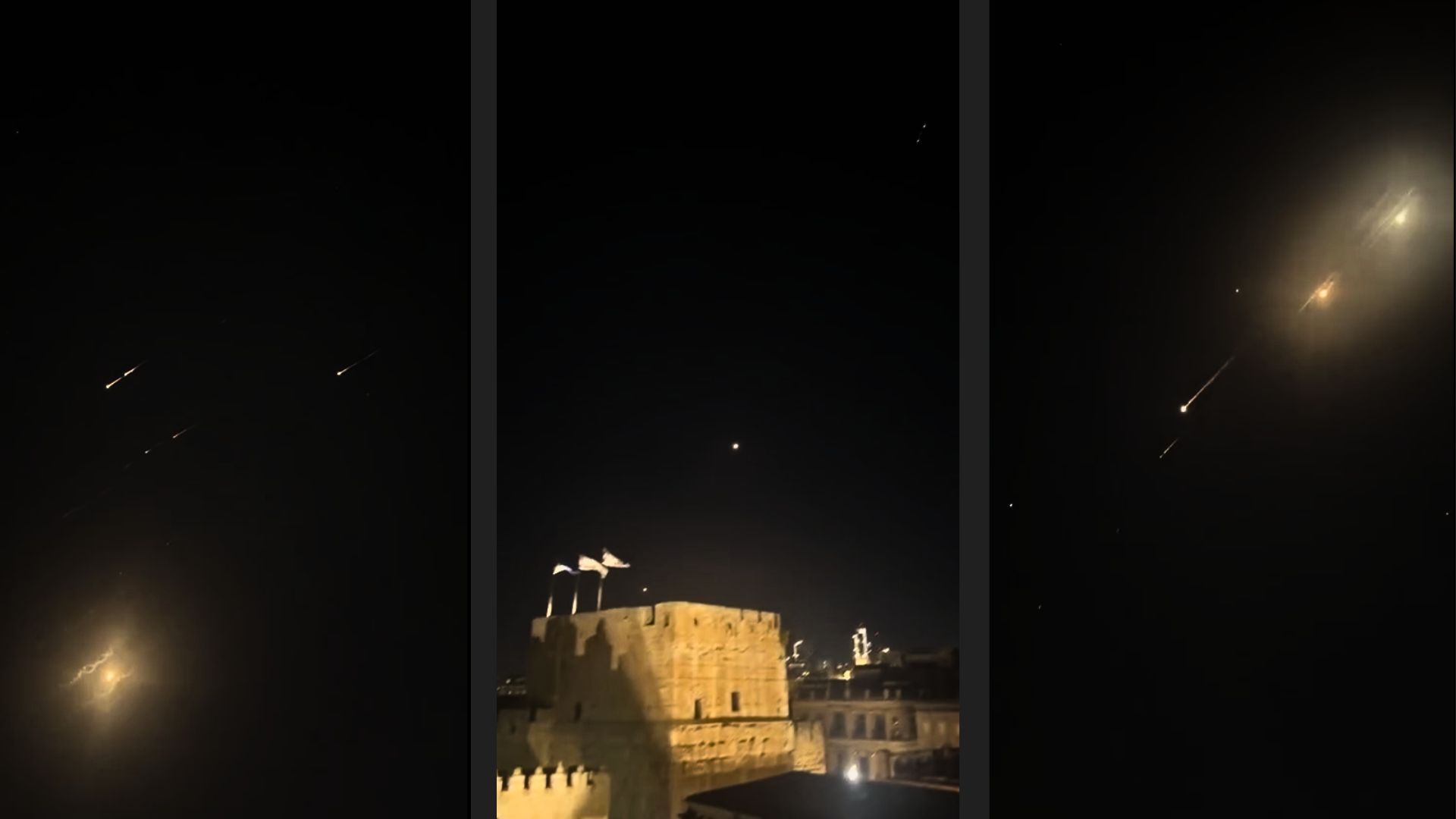
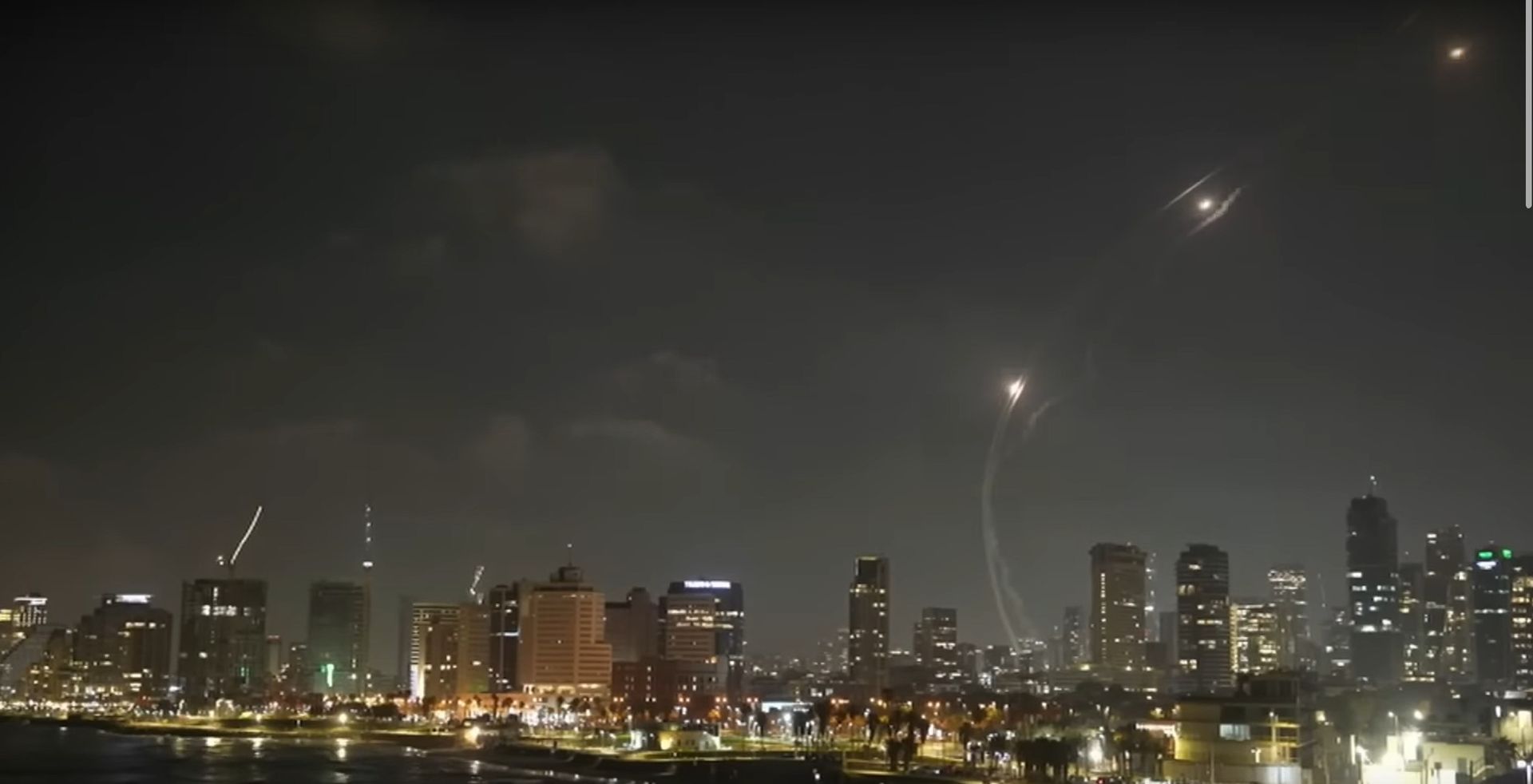
The next day an eight-day battle of rockets began between Hamas-led Gaza
and Israel. Our CMJ International Board meeting in Jerusalem went on as planned. Israelis cannot afford to interrupt life every time a Hamas rocket flies in. At the end of the week, a cease fire was brokered.
Since Israel withdrew from Gaza in 2005, over 8,000 Palestinian rockets have been fired on southern Israel. As a result over 40% of Israeli school aged children living in these areas suffer from PTSD (post-traumatic stress disorder), the “disease” of US military returning from war zones in Iraq and Afghanistan.
Most of us on our safe shores are puzzled by the daily headlines from the Middle East which fill our media. A man set himself on fire in Tunisia two years ago and what is now called “The Arab Spring” began. One after the other, Arab countries smelled the scent of freedom. Aspirations of democracy spilled into Tahrir Square in Cairo and rebellion broke out in Syria. Street demonstrations disrupted the normally quiet Jordon. The result was the overthrow in Egypt of Hosni Mubarak; in Syria the encroaching overthrow of Bashir Assad. These dictatorships had
lasted over 40 years.
Israel is smack dab in the middle of these turbulent nations to her left and to her right – as has always been the case from biblical days. First, Israelites were slaves in Egypt from their west; later Assyrians and Babylonians conquered from their east.
When you look at this map of today’s Middle East – can you even find little Israel?! It is about the size of New Jersey set in the midst of very large immediate neighbors all of whom self-identify as Arab and Islamic. That very small, kidney-shaped area west of Jordan is “the West Bank” – called that because it is on the west bank of the Jordan River. Getting a visual like this map is very helpful for most of us who live across a big ocean from this area. Note that just north of Tel Aviv , Israel’s major population center, there is a place where there is a corridor of Israel less than 15 miles wide. The history of how all of these countries’ borders were drawn following World War I (when the Ottoman Empire fell) is a fascinating and complex one. I suggest Princeton historian Bernard Lewis’s THE MIDDLE EAST: A Brief History of the Last 2,000 Years. And a book titled A PEACE TO END ALL PEACE by David Fromkin.
The Palestinian Issue
Is it all about the Palestinian people having a state of their own? This could have happened several times in recent history: in 1947 when the United Nations offered the Arab and Jewish inhabitants of the land four partition plans – the Jews accepted all four; the Arabs none of them. The “State of Palestine” would now be celebrating its 65th birthday on the same day (November 29, 2012) that Palestinian Authority President Mahmoud Abbas went before this same body asking to have the PA designated as a “nonmember observer state” by the same General Assembly of the UN. In this he succeeded but might the Arab people of the land done much better to have settled themselves into a fully acknowledged state as Israel did under the UN in 1947 and been given international acceptance then? Or after Jordon occupied what is today called “The West Bank” from 1947 to 1967 – this would have also been an opportunity for the Arabs living in this area to petition before an international board for statehood, but there was no mention of such an effort. It was not until Jordon reluctantly and against numerous petitions from the Israelis that they NOT enter what became known as “The Six Day War of 1967” that Jordon lost the West Bank to Israel. As a result the Arabs living in that area lost their Jordanian citizenship and became a people without passports or a country. Where does Iran fit into the equation?
And then there is Iran – not an Arab country at all. Iran is old Persia and its language is Farsi, not Arabic. It is the leader today in calling for the elimination of Israel (as “the little Satan”) and the USA (“the big Satan”). Its President since 2005 is another Mahmoud - Mahmoud Ahmadinejad. Ahmadinejad is a known Holocaust denier and hater of Israel. International powers continue to impose sanctions against Iran in the face of their refusal to step back from their threat to develop nuclear weapons.
Iran is also one of the leading countries of Shi’a Islam, a branch of Islam which broke off in the 7th century. The Sunni “denomination” of Islam is by far the majority of the Moslem world. The split between the two began just after the death of Mohammed, the founder of Islam, in AD 632 over the issue of the succession of the caliph to oversee the Islamic community. Today it is estimated that Shi’as constitute about 15% of the world Moslem population, but they are a majority in Iran.
What about religion in the area? The Sunnis, the Shi’a and the Jews
This is sometimes the most important underlying issue of all and one that in our secular/materialistic West has most often not considered seriously enough. Jews have lived for centuries in most of the countries of the Middle East and North Africa. They had been expelled from most of the European countries over the course of history, but most Middle Eastern Jews migrated into these areas following the Spanish Inquisition days and the expulsion of all Jews from the Iberian Peninsula (Spain and Portugal) in 1492. They are called Sephardic (coming from Spain) Jews. Under Islamic rule, the Jews and Christians were accepted into the Moslem society but with a different and inferior status to Moslems. They were known as Dhimmis which meant that they paid special taxes, were limited to certain professions, not allowed to witness against a Moslem in the court system, etc.
History of Modern Israel
The modern immigration of Jews from Europe into today’s Israel began in earnest in the 1880s as a result of a new anti-Semitic Czar coming to power in Russia. Violent pogroms /persecutions broke out against the Jews in the small Jewish villages (known asshtetls- think “Fiddler on the Roof”) of Eastern Europe. Most of them came to America, but many decided to settle in Israel where they joined the group of Jews already living there. The first Zionist Congress was convened in Basel, Switzerland in August 1897 under the leadership of Theodore Herzl.
Herzl was a journalist in Vienna, Austria, a liberal Jew who was thoroughly assimilated into European culture. The event which changed his life was the trial of a French officer, Dreyfus, who was a Jew being tried as a spy for Germany – a charge that was much later dismissed after Dreyfus was convicted and imprisoned. After the false trial, crowds of French shouted “Death to the Jews.” Witnessing this display of anti-Semitism, Herzl realized that “enlightened” Europe was not a safe place for Jews as he had imagined. He published, DER JUDENSTAAT (THE JEWISH STATE) in 1896 giving the reasons why the Jews must have a homeland of their own.
It was an Anglican priest, William Heschler, who arranged a meeting for Herzl with Frederick I, the Grand Duke of Baden – who was the nephew of Kaiser Wilhelm II of Germany. Herzl met with the Kaiser in 1898, a meeting which significantly advanced Herzl’s credibility across Europe of his program for a Jewish homeland.