Imitating Jesus: The Mystery and Mission of the Servant Songs

An overview teaching on Isaiah 42-53 and what the prophet says to us today
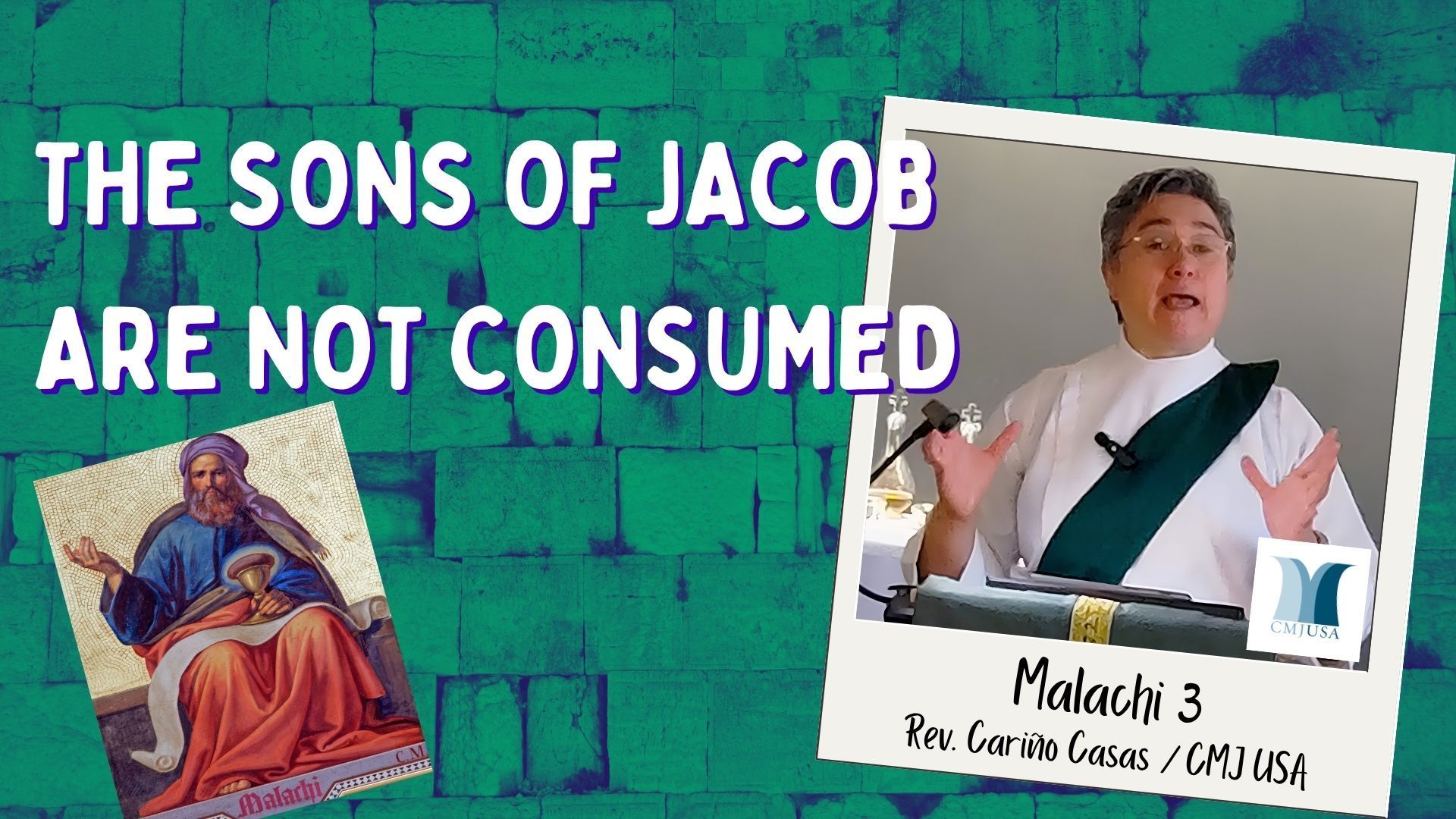
This teaching was recorded at Yeshua Ben David Messianic Congregation in Pittsburgh, PA in February 2026. Thank you to Yeshua Ben David for providing the video recording. The teaching begins at 22:07, and is proceded by the speaker's testimony and overview of the work of the Church's Ministry Among Jewish People.
Below is an edited and condensed version of the transcript.
I want us to go into Isaiah. This is what's been on my heart. We are going to start in Isaiah 41 and look at the "servant songs" today. My job is not to tell you anything new; my job is to remind you of what you already know, or show you things that I'm seeing and things the Lord is sharing with me.
I've been in the servant songs for several weeks now because the reading from Isaiah 49 came up in the Anglican liturgy last week. Every time I have to go into them, I read all of them, and I see new things. I wanted to share some of these things with you.
The Wide Angle: Israel as the Corporate Servant
What is the context of the servant songs? In Isaiah 40, God is calling the prophet to comfort Israel and share good news with them. Earlier in the book, Isaiah was warning Judah that judgment is coming. Judgment is coming, but there is hope—and that’s the message now that we're at the back end of Isaiah.
We have this figure that shows up called the servant of the Lord, and the very first mention of him is in Isaiah 41.
"But you, Israel, my servant, Yakov, whom I have chosen, descendants of Abraham, my friend, I have taken you from the ends of the earth, summoned you from the most distant parts, and said, 'You are my servant. I have chosen you, not rejected you.'" — Isaiah 41:8–9
There are always arguments about who the servant of the Lord is, but here it is super clear. The servant is the people who descended from Abraham—physical descendants. God reiterates this in Isaiah 44:21: "Keep these matters in mind, Yakov, for you, Israel, are my servant... Like a thick cloud I wipe away your offenses... Come back to me, for I have redeemed you."
This is the wayward nation being judged, but God is assuring them that exile and judgment is not rejection. When God sends us away from where we want to be, it's not rejection; it's judgment to draw us back to Himself. The Lord always brings judgment and hope together to show it's not a final break.
Zooming In: The Individual and Divine Servant
As you look at the other servant songs, the lens begins to zoom in. As a photographer, I think that way. Your phone has a wide-angle camera that sees everything, and then you pinch or zoom in. That’s what’s happening here. The writer is zooming in on what now appears to be an individual servant.
The Lawgiver to the Coastlands (Isaiah 42:1–7)
In Isaiah 42, God's spirit is upon this servant, and He brings justice not just to Israel, but to the nations. The Bible is about the Jewish people, yet constantly the Lord is saying, "and the nations, and the nations." We always have to keep that in view.
A few things stand out uniquely here:
- The Servant is the Covenant: Verse 6 says, "I will appoint you as a covenant to the people." It’s not just that the servant is in a covenant; the servant is the covenant.
- The Instruction of the Coastlands: The coastlands wait expectantly for His Torah (instruction). "Coastlands" poetically means lands far away. Because this servant has Torah to give, we get a hint that He is either a Moses figure (the Torah giver) or He is divine, because God is ultimately the Torah giver.
Formed in the Womb to Redeem Israel (Isaiah 49:1–13)
In Isaiah 49, the servant Himself speaks to the coastlands. He says Adonai formed him in the womb to be His servant and to bring Yakov back to Him.
This is why I say the perspective has shifted. It says "my servant Israel," but this servant is born in a womb and is explicitly called to regather the scattered nation of Israel. We are clearly talking about an individual—a servant who is despised and detested by the nation, yet kings will arise and princes will bow down. He frees prisoners and acts as a merciful provider, leading to an explosion of rejoicing.
The Arm of the Lord Revealed (Isaiah 51 & 53)
In Isaiah 51:9, the text cries out: "Awake, awake. Put on strength, O arm of the Lord." It says the arm of the Lord is the one who cut Rahab (Egypt) in pieces and worked the Exodus. Verse 16 says this arm has words in his mouth to establish the heavens and earth. We know God does that, so the arm of the Lord is clearly divine.
Everything comes together when we jump to Isaiah 52:13–53:1. God says His servant will prosper and be highly exalted, but His appearance will be marred more than any man. Then the text asks: "To whom has the arm of the Lord been revealed?"
The arm of the Lord is the servant.
- The servant is a man called to regather scattered Israel.
- The servant is the arm of the Lord with divine power to free captives and establish the heavens and earth.
- And as the rest of Isaiah 53 shows, this divine human suffers. He was pierced for our transgressions, crushed for our iniquities, and by His scourging we are healed. It is the complete gospel right here in Isaiah: a divine human called to regather Israel and the nations.
The New Testament Proclamation
For an uninitiated reader, you end up asking: "Who is this servant?" In Acts 8, the Ethiopian eunuch asks Philip the same thing: "Is this the prophet or somebody else?" Philip begins right there and tells him about Jesus. The New Testament is super clear that this servant is Jesus of Nazareth.
When you sit with the servant songs and then read the New Testament, things just start to pop:
- Simeon’s Song: Forty days after Christmas, we celebrate the presentation of Jesus in the temple (Luke 2). Simeon sees baby Jesus and says, "My eyes have seen your salvation, a light for the revelation to the Gentiles and for the glory of your people Israel." He is directly quoting Isaiah 49 and 42.
- The Gospels: Matthew 12 quotes Isaiah 42 to show that Jesus is the quiet servant who announces justice to non-Jews and doesn't fight or shout. Jesus quotes Isaiah 53 about Himself at the Last Supper, saying He must be counted with the transgressors (Luke 22). Matthew quotes it to explain His healing ministry (Matthew 8), and John quotes it to explain why people didn't believe (John 12).
- Paul's Chutzpah: Paul quotes Isaiah 49 to justify his mission to the nations. I recently led a study tour to Greece with Shore's Study Tours, and Philip was with me. We were struck by how thickly pagan and idolatrous ancient Greece was. Paul walks into places with idols everywhere and has the chutzpah to say, "Hey, not those gods, my God." Why? Because he stands on Isaiah 49:6: "I have made you a light for the Gentiles, that you may bring salvation to the ends of the earth." The mission of the servant motivates Paul to preach among the idolaters.
Key Takeaways for Us
I know this is a lot and I cut out a lot, but the Spirit was insistent that I review this with you today. Seek in your hearts what the Lord is trying to say to you through these three takeaways:
1. Hold the Tension and Acknowledge Suffering
When engaging with mainstream Jewish people, it is important to see that these passages speak of both the people of Israel and a singular servant. Too many times, Christian and Jewish apologists argue, saying "It's the nation," or "It's Jesus." No, it's both, and we need to hold that mystery in tension. Jesus is the individual representative Israel who dies for the collective Israel.
Furthermore, in the midst of rising antisemitism—where statistics show one-third of Jewish Americans have suffered something antisemitic in the last year—we have to acknowledge that the Jewish people suffer. Jesus suffered with and for the Jewish people in advance on the cross. We need to know how to speak comfort to them right now.
2. Imitate the Messiah Through Endurance
Paul says, "Imitate me as I imitate the Messiah." (1 Corinthians 11). This is Hebraic, rabbinic discipleship: we watch, we learn, we do. Paul preached, got beat up or imprisoned, and got right back up again because he understood that the way of the Messiah requires persevering through suffering.
In 2 Corinthians 6, Paul quotes the servant song in Isaiah 49 ("In a favorable time I listen to you...") and immediately explains that he commends himself as a servant of God through great endurance, afflictions, hardships, and sleepless nights. Why did Jesus choose to suffer? For the joy set before Him—the joy of you and me in His presence, and creation restored. Suffering insults, violence, injustice, or illness with Jesus is always redemptive. On the other side of it is God's affirmation, safety, justice, and healing.
3. Step Into Other People’s Suffering
Jesus is the Creator of the universe, yet He came down to serve us, suffer with us, and die for us to open the door to resurrection life. We imitate Him by stepping into the suffering of other people to show them hope and joy on the other side.
We need to do it with the Jewish people in the midst of antisemitism, and we need to do it among other communities suffering right now. No matter your political position, a person suffering is a person suffering, and we need to minister to them.
That's why I wear a Star of David. I'm a Gentile, but I wear it because I'm stepping into the risk of what that is right now. What is the risk the Lord is asking you to step into to minister to somebody?
Romans 8:15–17 carries a great promise and responsibility: we are joint heirs with the Messiah, provided we are suffering with him in order to be glorified with him. We are called to be servants of the Lord to regather Israel and the nations, but that requires suffering with them. Suffer in prayer for the sick, suffer in showing hospitality to the destitute, suffer in stepping out of your comfort zone to share the gospel, and sit and mourn with the grieving. Always remember, and remind others, that Jesus has already won for us the joy and the hope set before us—eternal life with God
Blessed by this post? Ready to sow into the work of CMJ? No gift is too small. we are blessed by your partnership.